

Introduction to Islamic Traditional Clothing
Islamic traditional clothing is far more than fabric stitched into garments; it is a living expression of faith, culture, climate, history, and identity. When people hear the phrase “islamic traditional clothing,” they often think of a few well-known items such as the hijab or thobe. However, the reality is much broader and far more nuanced. Across continents, from North Africa to Southeast Asia, Muslim communities have developed clothing styles that reflect both Islamic principles and local traditions.
At its core, Islamic clothing is guided by the concept of modesty. In Islam, modesty is not limited to clothing; it is a value that shapes behavior, speech, and lifestyle. Clothing simply becomes one visible representation of this deeper principle. The guidelines focus on covering certain parts of the body, avoiding extravagance, and maintaining dignity. Beyond these shared principles, there is enormous diversity in how Muslims interpret and express modest dress.
It is important to understand that Islamic traditional clothing is not a single uniform style. Instead, it is a tapestry of garments shaped by geography, trade, empire, craftsmanship, and evolving social norms. The clothes worn by a Muslim in Morocco can look very different from those worn in Indonesia or Pakistan, yet all can fall under the umbrella of islamic traditional clothing. This diversity is what makes the topic so rich and fascinating.
The Religious Foundations of Modest Dress
To understand islamic traditional clothing, one must begin with the religious foundations that shape it. The Qur’an and the teachings of Prophet Muhammad provide general guidelines regarding modesty. These guidelines emphasize covering the body appropriately, avoiding clothing that is overly tight or transparent, and dressing in a way that reflects humility rather than arrogance.
For men, the basic requirement is to cover the area from the navel to the knees, although many choose to dress more conservatively. For women, the requirements are more detailed and traditionally include covering the entire body except for the face and hands, though interpretations vary among scholars and communities. These guidelines have formed the basis for centuries of clothing traditions.
Importantly, the emphasis in Islamic teachings is on intention and behavior as much as on appearance. Clothing is not meant to become a tool for judgment or superiority. Instead, it serves as a reminder of faith and identity. The spiritual dimension of islamic traditional clothing often gets overlooked in modern debates, but historically it has always been central.
Diversity Across Regions and Cultures
One of the most compelling aspects of islamic traditional clothing is its diversity. Islam spread across vast regions, from the Arabian Peninsula to West Africa, Central Asia, South Asia, and beyond. As Muslim communities interacted with different climates, materials, and cultural aesthetics, they incorporated local styles into their clothing while maintaining Islamic principles.
In hot desert regions, loose and flowing garments became common because they provided ventilation and protection from the sun. In colder climates, layered clothing and heavier fabrics were preferred. In coastal regions, lightweight cotton and linen dominated, while in mountainous areas, wool and thicker textiles were widely used. Each region adapted modest clothing to its environment.
Cultural elements also played a strong role. Embroidery patterns, color preferences, and garment cuts often reflect local heritage rather than religious rules. This is why islamic traditional clothing cannot be reduced to a single “Islamic look.” Instead, it is a collection of regional expressions connected by shared spiritual values.
Traditional Clothing for Men
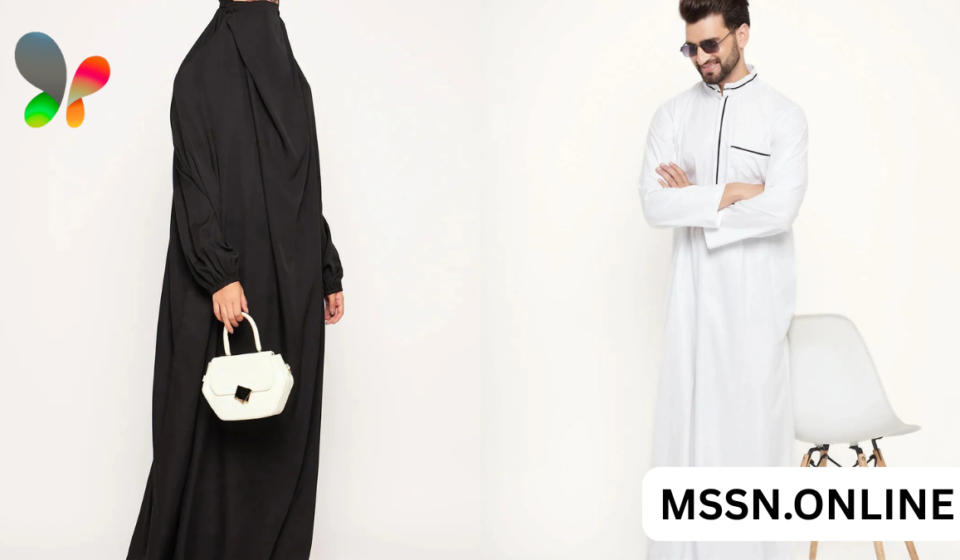
When discussing islamic traditional clothing, men’s garments are sometimes overlooked. However, men’s attire has played an equally important role in Islamic history. A common traditional garment in many Muslim-majority regions is the long robe, known by various names such as thobe, dishdasha, kandura, or jubba depending on the region.
These robes are typically loose-fitting and extend to the ankles. The design promotes modesty while also being practical in warm climates. In colder areas, men may wear cloaks, waistcoats, or layered tunics over their base garment. The use of simple cuts and neutral colors often reflects Islamic teachings about humility and avoiding extravagance.
Head coverings for men also form part of islamic traditional clothing in many cultures. Items such as turbans, kufis, or caps are worn for religious, cultural, or practical reasons. While not always mandatory, these head coverings are associated with tradition and respect, especially during prayer and religious gatherings.
Traditional Clothing for Women
Women’s clothing is often at the center of conversations about islamic traditional clothing. The hijab, or headscarf, is perhaps the most widely recognized symbol. However, even this single term encompasses numerous styles. Some women wear simple scarves wrapped around the head and neck, while others opt for longer garments that cover more of the body.
In addition to the hijab, garments such as the abaya, jilbab, chador, and khimar are worn in different regions. These garments vary in cut, color, and design. In some cultures, black is common; in others, bright colors and intricate embroidery are preferred. The key element is that the clothing remains modest and non-revealing.
It is essential to understand that islamic traditional clothing for women is not solely about restriction. Many women describe their attire as empowering, providing a sense of privacy and control over how they present themselves in public. The garment becomes both a spiritual symbol and a personal choice shaped by faith and identity.
Fabrics, Textiles, and Craftsmanship
The history of islamic traditional clothing is closely tied to the development of textile arts. Muslim civilizations were known for their advancements in weaving, dyeing, and embroidery. Silk from Central Asia, cotton from India, and wool from North Africa all played significant roles in shaping traditional garments.
Craftsmanship was often considered an honorable profession. Tailors and weavers passed down techniques through generations. Hand-stitched embroidery, geometric patterns, and calligraphic motifs were incorporated into garments, reflecting the broader Islamic artistic tradition. These elements added beauty without compromising modesty.
In many regions, clothing also signaled social status, occupation, or marital status. Certain fabrics were reserved for special occasions or celebrations. Despite these variations, the underlying principle of modesty remained central, anchoring islamic traditional clothing in both faith and artistry.
Color and Symbolism
Color in islamic traditional clothing is often misunderstood. While some associate Islamic dress exclusively with black or white, the historical reality is much more vibrant. Different cultures have favored different color palettes, influenced by local dyes and aesthetic traditions.
White is often associated with purity and simplicity, and it is commonly worn during religious rituals or significant life events. Green holds symbolic value in Islamic history and is sometimes associated with paradise and spirituality. However, no specific color is universally mandated for everyday wear.
Bright and bold colors are common in South Asia and parts of Africa, especially during weddings and festivals. Embellishments such as gold thread or decorative stitching are used for celebrations while maintaining modest cuts and designs. This balance between beauty and humility is a defining feature of islamic traditional clothing.
Islamic Clothing in South Asia
In South Asia, islamic traditional clothing reflects centuries of cultural exchange. Garments such as the shalwar kameez are widely worn by both men and women. This outfit consists of loose trousers paired with a long tunic, offering both comfort and modesty.
Women often add a dupatta, a long scarf draped over the shoulders or head, to complete their outfit. The fabrics range from simple cotton for everyday use to richly embroidered silk for weddings and religious events. Men may wear kurta pajamas or sherwanis during formal occasions.
The blending of Islamic principles with regional styles has produced a vibrant and diverse clothing culture. In this region, islamic traditional clothing is seamlessly integrated into daily life rather than reserved only for religious settings.
Islamic Clothing in the Middle East
The Middle East is often seen as the heartland of islamic traditional clothing. Here, garments such as the abaya for women and the thobe for men are common. The simplicity of these garments reflects the desert environment and the historical need for protection from harsh weather conditions.
Women’s abayas can range from plain black designs to elaborately decorated pieces with lace, embroidery, or beadwork. Men’s thobes are often white in hot climates but may be darker in cooler months. Head coverings such as the keffiyeh or ghutra are worn by men, secured with a black cord known as an agal.
Despite global influences, traditional attire remains strong in many Middle Eastern societies. While modern tailoring and fashion trends have introduced variations, the core features of islamic traditional clothing remain intact.
Islamic Clothing in Africa

Africa offers some of the most visually striking examples of islamic traditional clothing. In West Africa, for example, flowing robes known as boubous are worn by men and women alike. These garments are often made from brightly colored fabrics and feature elaborate embroidery.
Head wraps are also common and serve both cultural and modest purposes. In East Africa, long dresses and scarves are popular among Muslim women. The blending of Islamic modesty with vibrant African textile traditions creates a unique and powerful aesthetic.
These garments demonstrate how islamic traditional clothing can adapt to local artistry while remaining rooted in shared spiritual principles. The result is a rich diversity that challenges narrow stereotypes.
Islamic Clothing in Southeast Asia
In countries such as Indonesia and Malaysia, islamic traditional clothing has developed within tropical climates. Lightweight fabrics are favored, and garments are designed for breathability and comfort. Women often wear long tunics paired with skirts or loose trousers, along with colorful headscarves.
Traditional patterns such as batik are incorporated into modest clothing styles. Men may wear long shirts with sarongs during religious events. The integration of local craftsmanship with Islamic modesty guidelines has created distinctive regional expressions.
Southeast Asia illustrates how islamic traditional clothing continues to evolve while maintaining its essential values. The adaptability of modest dress ensures its relevance across different environments and cultures.
Modern Interpretations and Global Fashion
In recent decades, islamic traditional clothing has entered global fashion conversations. Designers from Muslim-majority and minority countries alike have created modest fashion lines that blend tradition with contemporary trends. Long coats, maxi dresses, and tailored abayas now appear on international runways.
Social media has also played a role in reshaping perceptions. Influencers share styling tips that combine traditional garments with modern accessories. This has made modest fashion more visible and accessible to younger generations.
However, modern interpretations do not necessarily abandon tradition. Instead, they reinterpret it. The core principles of modesty, dignity, and identity continue to anchor islamic traditional clothing, even as cuts and fabrics evolve.
Misconceptions and Stereotypes
Unfortunately, islamic traditional clothing is often misunderstood in global discourse. Some view it solely as a symbol of oppression, ignoring the cultural, spiritual, and personal dimensions behind it. Others mistakenly assume that all Muslims dress the same way.
In reality, clothing choices vary widely depending on personal conviction, cultural background, and local norms. Many Muslim women and men actively choose traditional attire as an expression of faith and pride. Simplistic narratives fail to capture this complexity.
Understanding islamic traditional clothing requires moving beyond stereotypes and engaging with its historical and cultural depth. When viewed in context, these garments tell stories of migration, trade, scholarship, and artistry.
The Role of Islamic Traditional Clothing in Identity
Clothing is one of the most immediate ways people express who they are. For many Muslims, traditional attire reinforces a sense of belonging and continuity. It connects them to ancestors, religious teachings, and a global community of believers.
In diaspora communities, islamic traditional clothing can serve as a powerful reminder of heritage. Wearing traditional garments during festivals, weddings, or prayers strengthens cultural ties. Even in secular environments, modest clothing can be a daily affirmation of faith.
This identity aspect explains why debates around Islamic dress often evoke strong emotions. The garments are not just clothes; they are woven with meaning, memory, and belief.
Conclusion: A Living Tradition
Islamic traditional clothing is not static or frozen in time. It is a living tradition shaped by centuries of interpretation, adaptation, and creativity. Rooted in the principle of modesty, it reflects both spiritual values and cultural diversity.
From the deserts of Arabia to the vibrant markets of West Africa and the bustling cities of Southeast Asia, islamic traditional clothing continues to evolve. It bridges past and present, faith and fashion, community and individuality.
Ultimately, understanding islamic traditional clothing requires appreciation rather than assumption. When examined thoughtfully, it reveals a rich tapestry of history, art, faith, and human expression.
FAQs
What is islamic traditional clothing?
It refers to modest garments worn by Muslims that follow Islamic guidelines while reflecting regional cultures.
Is wearing a specific color required in Islam?
No specific color is required; modesty and appropriateness are the main principles.
Do all Muslim women have to wear the same type of hijab?
No, styles vary widely based on culture, interpretation, and personal choice.
Is islamic traditional clothing only worn in Muslim-majority countries?
No, Muslims around the world wear traditional clothing regardless of location.
Can islamic traditional clothing be fashionable?
Yes, modest fashion blends tradition with modern design while respecting Islamic principles.
Also read: Busby East Renfrewshire: A Detailed Guide to History, Community, and Modern Living