

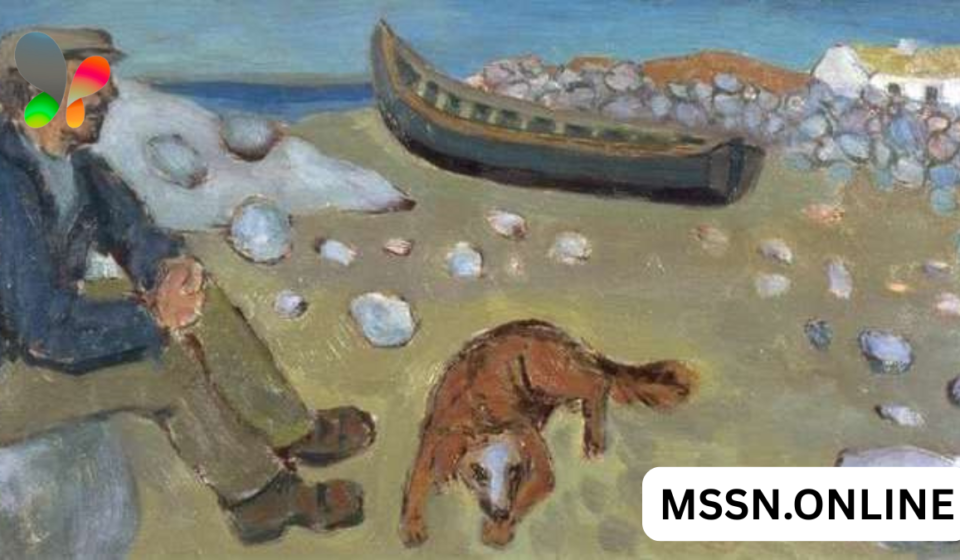

Introduction: Why Gerard Dillon Still Matters Today
Gerard Dillon remains one of the most intriguing figures in twentieth-century Irish art. While some painters chase fame and dramatic public attention, Dillon built his reputation through sincerity, emotional honesty, and an unmistakable visual language that continues to inspire artists today. His work feels deeply personal yet universally accessible, capturing everyday Irish life with warmth, imagination, and subtle symbolism.
What makes Dillon especially fascinating is that he was largely self-taught. Unlike many celebrated painters who emerged from prestigious academies, he developed his craft through observation, experimentation, and relentless curiosity. This independence allowed him to create art that resisted rigid artistic rules. Instead, he blended realism with dreamlike qualities, making his paintings both grounded and slightly mystical.
Today, collectors, historians, and art lovers often revisit Dillon’s paintings to understand how modern Irish identity evolved through visual storytelling. His scenes of rural communities, spiritual reflection, and cultural memory offer more than aesthetic pleasure—they serve as emotional archives of a changing Ireland. Even decades after his passing, his work continues to feel surprisingly fresh.
Early Life and Humble Beginnings
Gerard Dillon was born in Belfast in 1916, a time when Ireland was undergoing political upheaval and cultural transformation. Growing up in a working-class Catholic family meant that luxury was scarce, but creativity was not. His environment exposed him to strong community values, religious traditions, and the rhythm of everyday life—all themes that would later appear in his paintings.
As a young boy, Dillon showed artistic promise, but formal training was not immediately within reach. Instead of attending an art school early on, he worked various jobs, including house painting and decorating. Interestingly, these experiences helped him develop a strong sense of color and composition. Sometimes the most unconventional paths shape the most distinctive artists.
In his late teens, Dillon moved to London. The city opened his eyes to galleries, exhibitions, and artistic possibilities he had never encountered before. Although he did not enroll in a major academy, he spent countless hours studying artworks in museums. This self-directed education sharpened his visual instincts and encouraged him to trust his creative voice.
The Influence of Travel on His Artistic Vision
Travel played a transformative role in Dillon’s development. One of the most important journeys he undertook was to the Aran Islands off Ireland’s west coast. The rugged landscapes, traditional lifestyles, and spiritual quiet of the islands deeply affected him. Many artists have been drawn to these islands, but Dillon interpreted them with unusual tenderness.
Rather than romanticizing rural life, he portrayed it with authenticity. Fishermen, families, cottages, and windswept terrain appeared frequently in his work. Yet he infused these subjects with gentle stylization, creating scenes that felt both real and poetic. His paintings often suggest memory rather than direct observation, as though filtered through emotion.
Travel also broadened his understanding of artistic movements across Europe. Exposure to modernism encouraged him to simplify forms and experiment with perspective. However, he never abandoned narrative warmth. Even when influenced by modern techniques, Dillon remained committed to telling human stories.
A Self-Taught Style That Defied Expectations
One of Dillon’s greatest strengths was his refusal to be boxed into a single artistic category. Critics sometimes struggled to label his style because it combined elements of folk art, modernism, and personal symbolism. Yet this very ambiguity is what made his work memorable.
His figures often appear slightly elongated or simplified, almost childlike in execution. This was not due to lack of skill; rather, it reflected a deliberate artistic choice. By reducing detail, he allowed viewers to focus on mood and meaning. There is a quiet emotional resonance in his paintings that draws the viewer inward.
Color was another defining feature of his work. Dillon favored earthy tones punctuated by soft blues, greens, and warm reds. These palettes created a sense of calm, reinforcing the reflective quality of his subjects. Even when depicting hardship or isolation, his paintings rarely feel bleak. Instead, they carry a sense of resilience.
Themes That Defined His Work
Dillon returned repeatedly to certain themes, each revealing something about his worldview. Community was central. Whether painting neighbors gathered together or individuals lost in thought, he emphasized human connection.
Spirituality also appeared subtly throughout his art. Rather than overt religious imagery, he often suggested introspection—people walking alone, gazing outward, or engaged in quiet rituals. These moments invite viewers to pause and reflect, much like the figures themselves.
Another recurring theme was displacement. Having lived between Belfast, London, and rural Ireland, Dillon understood what it meant to belong to multiple worlds. This emotional duality surfaces in paintings that feel both intimate and slightly distant, as if capturing a memory that cannot be fully reclaimed.
Breaking Into the Art Scene
Dillon’s early exhibitions received encouraging attention, particularly because his work felt distinct from mainstream trends. While some artists pursued abstraction aggressively, Dillon balanced innovation with storytelling. This made his paintings approachable without sacrificing sophistication.
His participation in group exhibitions helped him build relationships within artistic circles. Over time, collectors began to recognize the authenticity of his vision. Success did not arrive overnight, but when it did, it felt well deserved.
Importantly, Dillon never appeared overly concerned with commercial popularity. He painted what felt meaningful rather than what might sell quickly. Ironically, this integrity increased his long-term appeal. Audiences often sense when an artist is genuine.
Life Between Ireland and London
Living between two cultural environments shaped Dillon’s identity as both an Irish and international artist. London offered energy, diversity, and exposure to global art movements. Ireland provided emotional grounding and thematic inspiration.
This duality enriched his work. Urban experiences sharpened his awareness of modern life, while rural memories kept him connected to tradition. The result was art that bridged past and present.
Balancing these worlds was not always easy. Like many artists navigating multiple identities, Dillon sometimes felt like an outsider everywhere. Yet this perspective allowed him to observe society with unusual sensitivity.
Personal Struggles and Emotional Depth
Behind Dillon’s gentle paintings was a complex inner life. Artists often channel personal challenges into creative expression, and Dillon was no exception. Periods of loneliness and uncertainty found their way into quieter compositions.
However, his work rarely dramatizes suffering. Instead, it transforms vulnerability into empathy. Viewers often sense compassion in his portrayals of ordinary people. He painted individuals not as subjects to analyze but as lives to honor.
This emotional intelligence is part of what keeps his work relevant. Modern audiences, perhaps more than ever, appreciate art that acknowledges human fragility while offering hope.
Experimentation Across Mediums
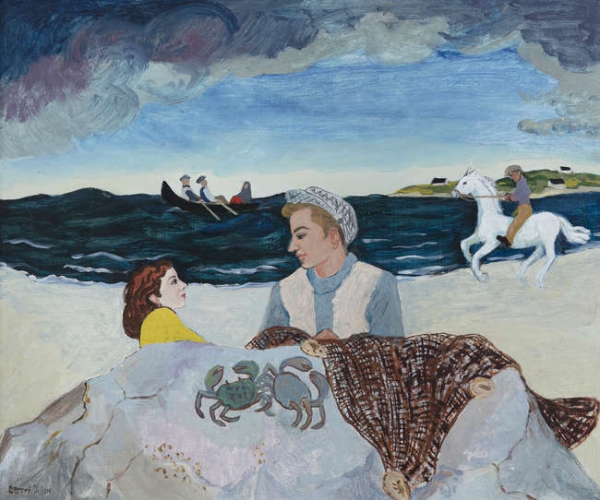
Although best known for painting, Dillon explored other forms of artistic expression as well. Drawing and stage design allowed him to experiment with spatial relationships and narrative structure.
Working in theater design, for instance, encouraged him to think about how viewers move through visual space. This theatrical awareness subtly influenced his paintings, which often feel staged yet natural—like moments frozen mid-story.
Experimentation kept his creativity alive. Rather than repeating successful formulas, he continued to evolve, proving that artistic growth does not require abandoning one’s core identity.
Critical Reception and Growing Recognition
Art critics gradually began to appreciate Dillon’s contribution to modern Irish painting. Reviews often highlighted the emotional sincerity of his work. While some initially underestimated his folk-like style, deeper analysis revealed remarkable sophistication.
Collectors responded positively as well. Paintings that once seemed modest gained value as scholars recognized their historical importance. Today, Dillon is widely regarded as a key figure in shaping Ireland’s modern visual culture.
Recognition, however, never seemed to alter his artistic temperament. He remained focused on creating meaningful work rather than cultivating celebrity.
Relationships Within the Artistic Community
No artist thrives in isolation, and Dillon maintained friendships with fellow creatives who encouraged dialogue and collaboration. These relationships fostered intellectual exchange, helping him refine his ideas.
Yet he never lost his independent spirit. Even when surrounded by strong artistic personalities, he preserved his distinctive voice. This balance between community and individuality mirrors the themes present in his paintings.
Support networks matter, but authenticity matters more. Dillon understood this intuitively.
The Symbolism Hidden in Simplicity
At first glance, many of Dillon’s paintings appear straightforward. Look closer, however, and subtle symbolism emerges. A solitary figure might represent introspection. A clustered group might suggest belonging—or perhaps emotional dependence.
Landscapes often function as psychological spaces rather than mere settings. Open fields can imply freedom, while enclosed areas may hint at constraint. Dillon trusted viewers to interpret these signals without heavy explanation.
This restraint is a hallmark of mature artistry. Instead of dictating meaning, he created room for contemplation.
Teaching and Influence on Future Artists
Though not primarily known as a teacher, Dillon influenced younger artists through example. His career demonstrated that formal training, while valuable, is not the only path to artistic excellence.
Emerging painters admired his courage to remain stylistically honest. In a world where trends shift quickly, Dillon’s consistency offered reassurance that authenticity has lasting power.
Even today, art students study his work to understand how personal narrative can coexist with modern technique.
Later Years and Artistic Maturity
As Dillon grew older, his work reflected increasing introspection. The compositions became quieter, sometimes more minimal. Rather than chasing novelty, he refined what already felt true.
This period reveals an artist comfortable with himself. There is a sense of acceptance in these later works—an understanding that art does not need to shout to be heard.
Maturity often brings clarity, and Dillon’s paintings from this stage feel deeply resolved.
Legacy in Irish Cultural History
Gerard Dillon’s legacy extends beyond individual paintings. He helped shape a visual language that allowed Ireland to see itself with nuance. Instead of grand heroic imagery, he focused on ordinary lives, suggesting that everyday experiences deserve artistic attention.
Museums and galleries continue to showcase his work, ensuring that new generations encounter his perspective. Scholars frequently reference him when discussing the evolution of modern Irish art.
Legacy is not just about fame; it is about influence that quietly endures. Dillon achieved exactly that.
Why His Work Resonates in the Modern World
In today’s fast-paced digital culture, Dillon’s paintings offer something rare: stillness. They invite viewers to slow down, observe, and feel.
Themes of belonging, identity, and memory remain universally relevant. Although the world has changed dramatically since his lifetime, human emotions have not. Dillon understood this timelessness.
Perhaps that is why his work continues to attract attention. It speaks softly but profoundly.
Collecting Gerard Dillon Today
Collectors often value Dillon’s paintings not only for their aesthetic appeal but also for their historical significance. Owning one of his works feels like preserving a piece of cultural heritage.
Art markets fluctuate, yet pieces associated with strong narratives tend to maintain interest. Dillon’s authenticity ensures that his paintings rarely feel dated.
For serious collectors, his work represents both emotional and intellectual investment.
Interpreting Dillon: Tips for Viewers
When approaching a Dillon painting, resist the urge to analyze too quickly. Spend time noticing color relationships, body language, and spatial arrangements.
Ask what emotion the scene evokes rather than what it literally depicts. Often, the answer lies somewhere between memory and imagination.
Art rewards patience, and Dillon’s work especially benefits from thoughtful viewing.
Conclusion: The Enduring Power of Quiet Art
Gerard Dillon may not have pursued artistic fame aggressively, but his impact is undeniable. Through sincerity, observation, and emotional depth, he created paintings that continue to resonate across generations.
His journey reminds us that great art does not always emerge from privilege or formal prestige. Sometimes it grows from curiosity, resilience, and a willingness to see beauty in ordinary life.
In many ways, Dillon represents the artist as storyteller—someone who preserves fleeting moments and transforms them into lasting reflections. Long after trends fade, this kind of artistry remains meaningful.
FAQs
Who was Gerard Dillon?
Gerard Dillon was a twentieth-century Irish painter known for his emotionally rich depictions of everyday life and rural communities.
Was Gerard Dillon formally trained as an artist?
No, he was largely self-taught and developed his style through observation and independent study.
What themes appeared most often in his work?
Community, spirituality, identity, memory, and the quiet dignity of ordinary people were central themes.
Why is Gerard Dillon important in Irish art history?
He helped shape modern Irish visual identity by blending personal storytelling with modern artistic techniques.
Where can people see his paintings today?
His works are held in major museum collections and galleries, particularly those focused on Irish modern art.
What makes his style unique?
His simplified figures, gentle color palettes, and symbolic storytelling create paintings that feel both intimate and timeless.
Did travel influence his art?
Yes, especially his time on Ireland’s west coast, which inspired many of his most memorable works.
Is Gerard Dillon popular among collectors?
Yes, collectors value his paintings for their authenticity, cultural importance, and lasting emotional appeal.
What emotions do his paintings typically evoke?
They often inspire reflection, calmness, empathy, and a sense of quiet connection.
Why does his work remain relevant today?
Because it explores universal human experiences that continue to resonate regardless of era.
Also read: Gallagher Name History: Origins, Meaning, and Irish Legacy